
Subway Tuna: Price, Calories and Nutrition (2026)
The Subway Tuna is the cult classic. Flaked tuna mixed with mayonnaise, piled on freshly baked bread with all vegetables, and a sandwich that has survived every menu change because people love it. It is the order for tuna-salad loyalists, for comfort-food seekers, and for anyone who grew up on it. In 2026 the standard 6-inch Tuna carries 480 calories and a price starting from $7.49. Here is the current price, the calorie count, and the full nutrition breakdown.
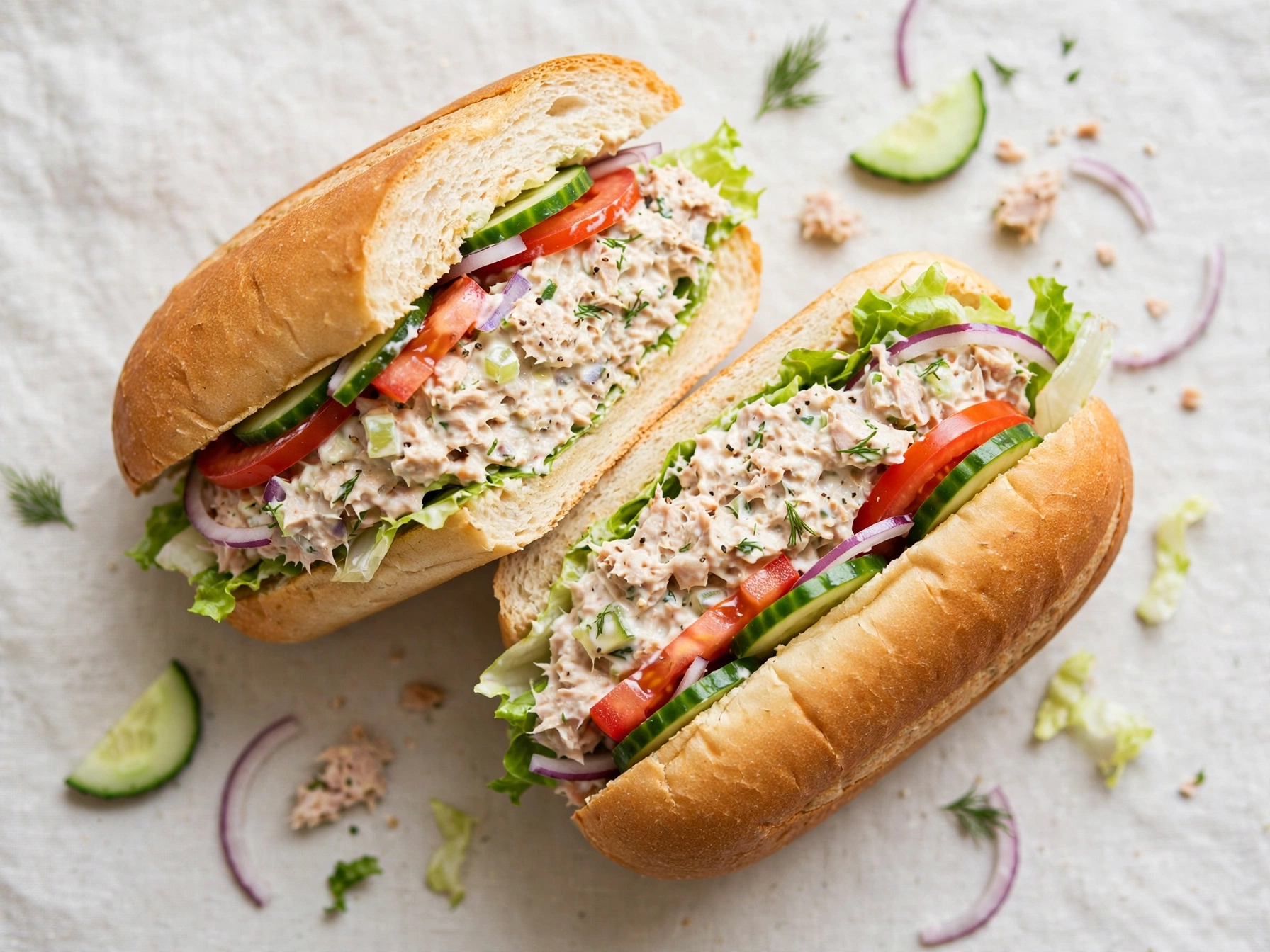
Price and calories callout
Subway Tuna price: from $7.49. Subway Tuna calories: 480. Prices vary by location because Subway restaurants are individually owned, with most landing between $7.49 and $9.49 for a 6-inch. The 480 calorie figure covers one standard 6-inch: tuna salad with lettuce, tomatoes, onions, green peppers, cucumbers on 9-grain wheat or Italian bread, no cheese, no extra sauce.
Last updated: July 10, 2026
Table of contents
- Price and calories callout
- What is in the Tuna
- Tuna nutrition facts
- Tuna ingredients and customization
- Allergens
- Tuna vs Turkey Breast
- Getting the best value on the Tuna
- Frequently asked questions
What is in the Tuna
The build centers on the tuna salad: flaked tuna mixed with mayonnaise in the restaurant. That is the entire protein, and it is the flavor of the sandwich. The tuna is mild, the mayo is rich, and the combination is the comfort-food classic that regulars order on autopilot.
The standard build is tuna salad with lettuce, tomatoes, onions, green peppers, and cucumbers, and most people add pickles and banana peppers for acidity to cut the richness. The vegetables are not optional here; the tuna needs crunch. With everything on it, this is a substantial, satisfying sandwich.
At 480 calories with 22 grams of protein, the 6-inch is a filling lunch, but the 31 grams of fat is the highest among the cold subs. The fat comes almost entirely from the mayonnaise in the tuna salad. Sodium runs 610 mg, which is moderate for the menu.
One thing worth knowing: the tuna is made fresh in the restaurant, and regulars swear the morning batch tastes best. The sandwich is served cold as standard, but the tuna melt preparation, toasted with cheese, is the sleeper hit of the menu.
Tuna nutrition facts
Full nutrition breakdown for one standard 6-inch Tuna, based on Subway’s official US nutrition data. Standard build: tuna salad, lettuce, tomatoes, onions, green peppers, cucumbers, 9-grain wheat or Italian bread. No cheese, no extra sauce.
| Nutrient | Amount per 6-inch Tuna |
|---|---|
| Calories | 480 |
| Total fat | 31g |
| Total carbohydrates | 43g |
| Protein | 22g |
| Sodium | 610mg |
The 31 grams of fat is the defining number, nearly all of it from the mayonnaise mixed into the tuna. The 22 grams of protein is solid, and the 43 grams of carbohydrates come from the bread and vegetables. Sodium at 610 mg is 27 percent of the daily guideline.
For context, the Tuna is the richest cold sub: 480 calories against 450 for the Italian B.M.T. and 310 for the Subway Club. It is a comfort-food sandwich, not a diet sandwich, and the regulars who love it know that.
Tuna ingredients and customization
The standard ingredient list is tuna salad (flaked tuna mixed with mayonnaise), your choice of bread, and the vegetable lineup. The tuna is 100 percent wild-caught, and the salad is mixed in the restaurant.
Customization works around the fixed tuna salad. Bread choices apply as usual. The vegetables are where the sandwich is made: load the crunchy, acidic ones, pickles, banana peppers, onions, to balance the rich tuna. Hot sauce or mustard cut the richness; creamy sauces add to it.
One popular customization is the Tuna Melt: the tuna with cheese, toasted. It is not a standard menu item, but most locations will make it on request. The heat melts the cheese into the tuna salad, and it is one of the best off-menu orders at Subway.
Allergens
The Tuna contains wheat and gluten (bread), egg (mayonnaise), fish (tuna), and soy (present in some bread formulations). Cheese adds milk. Cross-contact with all major allergens is possible on the shared prep line. Always check Subway’s current allergen information if you have a serious allergy.
Tuna vs Turkey Breast
The rich against the lean. Tuna: 480 calories, 31g fat, 22g protein, 610mg sodium, from $7.49. Turkey Breast: 280 calories, 4g fat, 18g protein, 760mg sodium, from $6.99.
The Turkey Breast wins on calories by 200 and on fat by nearly eight times. The Tuna wins on protein by 4 grams and on satisfaction for comfort-food seekers. The turkey costs about fifty cents less.
Pick the Tuna when you want the classic rich tuna-salad experience and the calories are acceptable. Pick the Turkey Breast when you want the lighter lunch. They are opposite ends of the cold-sub spectrum.
Getting the best value on the Tuna
At from $7.49, the Tuna is fairly priced for a 480-calorie sandwich with 22 grams of protein.
- Tuesday is Tuna day on the Sub of the Day rotation at many locations: from $4.99 for the 6-inch, the best price on the menu.
- Load the free vegetables. Crunch is the tuna’s best friend, and it costs nothing.
- Skip the cheese. The tuna salad is already rich; cheese adds a dollar and 50 calories for little benefit.
- Ask for the tuna melt preparation if you want it toasted with cheese. Most locations will make it on request.
- Hot sauce or mustard cut the richness for free and add flavor without calories.
Frequently asked questions
How much is the Subway Tuna in 2026?
How many calories are in the Subway Tuna?
What is in the Subway Tuna?
Is the Subway Tuna healthy?
Tuna or Turkey Breast, which is better?
What is a Tuna Melt at Subway?
ManuBite Team. We track fast food prices and nutrition across the USA so you always know what your meal really costs, in dollars and in calories.
 ← PREVIOUSSubway Subway Club: Price, Calories and Nutrition (2026)
 NEXT →Subway Black Forest Ham: Price, Calories and Nutrition (2026)
Want more Subway menu favourites? Check our Subway Club guide, our Black Forest Ham guide and our Turkey Breast guide for prices, calories and nutrition facts.
2 Comments